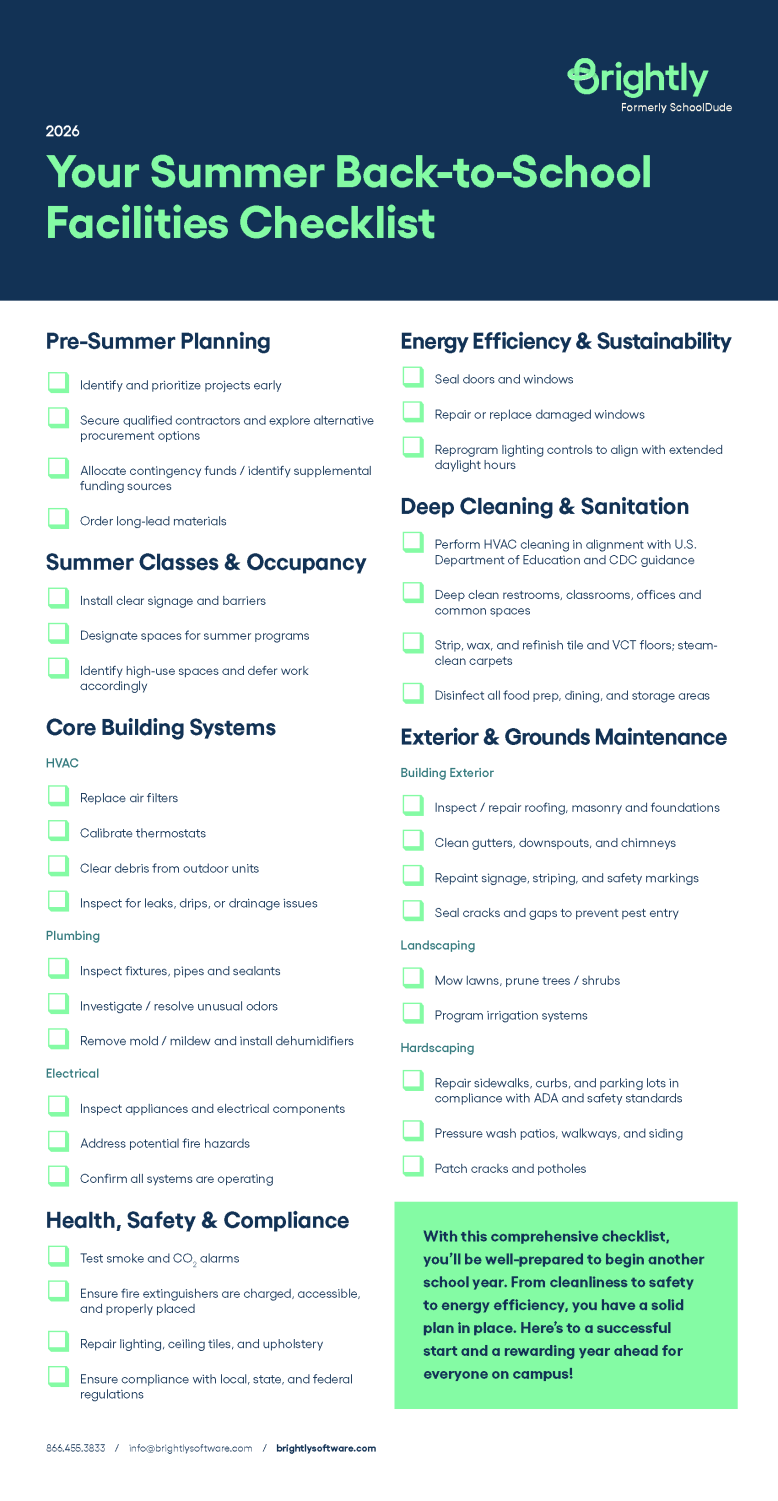
Summer Facility Project Check-List
Your Summer Facilities Checklist: Plan Smart, Work Efficiently, Recharge Fully
As students and teachers head off for summer break, facilities teams shift into their busiest season of the year. Summer presents a critical window to complete major projects, perform preventive maintenance, and prepare campuses for a successful new school year.
With so much happening in a short timeframe, thoughtful planning isn’t optional — it’s essential. A well-organized summer project plan helps your team stay on track, minimizes disruptions, and creates space for you to step away and recharge.
Use this checklist to streamline summer work, reduce last-minute surprises, and ensure nothing slips through the cracks.
Pre-Summer Planning
- Identify and prioritize projects early based on urgency, safety, and stakeholder input.
- Secure qualified contractors ahead of peak season and explore alternative procurement options to accelerate timelines.
- Allocate contingency funds and identify supplemental funding sources to manage unexpected costs.
- Order long-lead materials in advance to prevent delays.
- Prioritize projects using risk, asset condition, and long-term capital plans — not just immediate requests.
- Align summer work with multi-year capital investment strategies to avoid rework.
Avoid Common Summer Planning Pitfalls
- Overloading teams without clear prioritization.
- Focusing only on visible work vs. critical infrastructure.
- Not aligning summer work with long-term capital plans.
- Lack of tracking and documentation for future planning.
Summer Classes & Occupancy Planning
- Coordinate with school leadership to designate spaces for summer programs or adjusted hours.
- Install clear signage and barriers in active work zones to ensure safety and proper wayfinding.
- Schedule disruptive work during weekends or off-hours whenever possible.
- Identify high-utilization spaces and defer or phase work accordingly.
Core Building Systems Maintenance
HVAC
- Prevent mid-year failures and improve learning conditions through proactive HVAC servicing.
- Replace air filters to improve indoor air quality and system performance.
- Calibrate thermostats for optimal summer cooling.
- Clear debris from outdoor units and clean coils to maintain efficiency.
- Inspect for leaks, drips, or drainage issues and address promptly.
Plumbing
- Inspect fixtures, pipes, and sealants for leaks or wear.
- Investigate and resolve unusual odors.
- Prevent mold and mildew by removing growth and installing dehumidifiers where needed.
Electrical
- Inspect, repair, or replace appliances and electrical components.
- Address potential fire hazards.
- Confirm all systems are operating safely and reliably.
Health, Safety & Compliance
- Test smoke and CO₂ alarms and replace batteries as needed.
- Inspect fireplaces and fire suppression systems.
- Verify fire extinguishers are charged, accessible, and properly placed.
- Repair lighting, ceiling tiles, and upholstery to maintain safe learning environments.
- Ensure compliance with local, state, and federal regulations to reduce liability and protect student safety.
Energy Efficiency & Sustainability
- Seal doors and windows to reduce energy loss.
- Repair or replace damaged windows.
- Reprogram lighting controls to align with extended daylight hours.
- Identify energy optimization opportunities while buildings are unoccupied.
- Align upgrades with sustainability targets and funding programs.
Deep Cleaning & Sanitation
Building-Wide Cleaning
- Perform HVAC cleaning in alignment with U.S. Department of Education and CDC guidance.
- Deep clean restrooms, prioritizing high-touch areas, and touch-free fixtures.
- Strip, wax, and refinish tile and VCT floors; steam-clean carpets.
Food Service Areas
- Disinfect all food prep, dining, and storage areas.
- Degrease surfaces and sanitize equipment to reduce health risks.
Classrooms, Offices & Common Spaces
- Deep clean and disinfect all surfaces.
- Focus on high-touch points such as desks, handles, switches, and shared equipment.
- Ensure proper waste removal and recycling.
Exterior & Grounds Maintenance
Building Exterior
- Inspect and repair roofing, masonry, and foundations.
- Clean gutters, downspouts, and chimneys.
- Repaint signage, striping, and safety markings.
- Upgrade outdoor lighting to improve security and visibility.
Pest Control
- Monitor for signs of infestation and respond quickly.
- Seal cracks and gaps to prevent entry.
- Maintain cleanliness to eliminate food sources.
- Address termite activity with professional support.
Landscaping
- Mow lawns, prune trees and shrubs, and manage weeds.
- Program irrigation systems and assess drainage on slopes.
- Apply mulch or fertilizer to support plant health.
Hardscaping
- Repair sidewalks, curbs, and parking lots in compliance with ADA and safety standards.
- Pressure wash patios, walkways, and siding.
- Patch cracks and potholes to prevent trips and injuries.
Painting & Visual Refresh
- Refresh classrooms and hallways to create welcoming learning environments.
- Paint exterior walls to enhance curb appeal and protect surfaces.
- Refinish playground structures, fences, and railings for durability and safety.
Work Smarter with the Right Tools
Managing summer work effectively isn’t just about completing tasks, it’s about having visibility into priorities, progress, and long-term impact. Using a CMMS allows you to organize summer work orders, track progress, and preserve checklists for future use, supporting preventive and corrective maintenance throughout the year.
Taking it a step further, integrating capital planning enables proactive budgeting and long-term forecasting, helping institutions plan major renovations and capital investments years in advance — often maximizing the impact of summer downtime.
Ready to make sure your facilities are summer-ready? Download the Summer Facilities Checklist.