
Optimizing the 3 Stages of Every Asset Lifecycle for Smarter Maintenance
Key Takeaways
- Strong CMMS data is essential for connecting all three asset lifecycle stages and enabling proactive, evidence-based maintenance and capital planning.
- Each lifecycle stage requires a distinct focus, from documenting new assets to monitoring performance, to make data-driven replace-or-repair decisions as they age.
- Consistent, high-quality data entry is the foundation for reliable insights, better budgeting, and optimized long-term asset performance.
Simply keeping assets up and running is no longer a viable plan. Facing aging buildings, budgetary pressures, and increasing compliance demands, asset managers must stretch every dollar from their existing equipment while balancing risks and making smart investments for the future.
Building a holistic strategy to drive critical maintenance decisions requires tracking and optimizing assets through all three lifecycle stages, as outlined in our “What If….” Smarter Asset Maintenance Strategy guide: when assets are new, stable, and fully documented; when they enter routine use and operational patterns emerge; and when they approach end-of-life and small oversights can escalate into budget emergencies.
Why good data matters
The vital link connecting these asset lifecycle phases is robust CMMS data: asset documentation, maintenance history, and performance metrics. When a foundation of quality data is in place, these digital threads can be seamlessly integrated to help teams stay ahead of failures, justify funding for replacements, and strengthen capital planning.
Teams must understand the strategic focus, opportunities, and challenges of every asset stage:
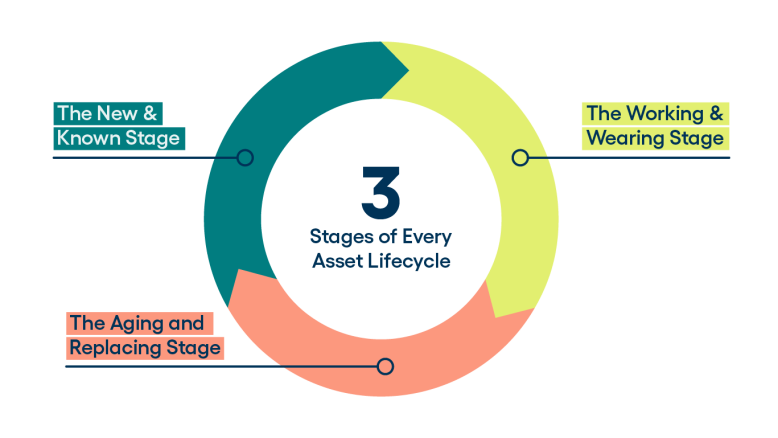
1. The New & Known stage
The earliest asset phase necessitates organization and documentation.
Whether just replaced or handed over from construction, new assets start with a clean slate. Conditions are “known” along with warranties, preventive maintenance, and expected performance. But when major equipment, including emergency power, chillers, and boilers, is new, it begins to wear and depreciate from the day it’s installed.
Learn more about day-one resiliency in facility operations.
The biggest pitfall in this phase is delaying tracking, since “nothing appears to be failing yet,” which leads to incomplete maintenance records later. Accurate data tied to the work should be meticulously recorded — from asset-specific information and work order details to resource/cost information and performance metrics. This sets the stage for tracking, analysis, and continuous improvement throughout an asset’s lifespan.
2. The Working & Wearing stage
As routine asset use kicks in, your CMMS should guide operational decisions.
During asset mid-life, proactive data collection and evaluation begin to pay off in subtle patterns and trends. Performance and cost records help distinguish between “standard” wear and early signs of decline. When repair frequency, downtime hours, and costs trend upward, your CMMS can surface that pattern, prompting intervention before failure occurs.
If past maintenance context is missing or lost during employee turnover, anomalies can go unnoticed and decisions may default to guesswork — putting productivity and safety at risk. Clear visibility into asset behavior allows your CMMS to “do the talking” for you during budget and capital planning conversations.
3. The Aging & Replacing stage
Strategic replacement planning supports long-term capital investments.
As assets begin to wind down, repair vs. replacement decisions have significant operational and financial implications. If early warning signs were missed — and repairs, refurbishments, or replacements were left out of capital plans — maintenance teams can be caught off guard, resources can be strained even further, and costs can escalate quickly.
The key is recognizing when repairs have become inefficient and outweigh the remaining operational value of an asset, making replacement the smarter choice. When backed by a well-maintained CMMS or EAM, an asset manager can proactively prepare leadership and set aside budgets in advance.
Check out our 4-step approach for creating capital plans.
What if…your data is lacking?
Without relevant and trustworthy data, leaders have limited proof to improve maintenance operations and make confident financial determinations. One of the best ways to improve data-driven insights is to update work orders to include adequate data such as work type, work category, problem, and cause.
Quality data starts with good data entry, which entails capturing as much data as possible without overburdening your team. This requires solid training, standard best practices, and regular enforcement through KPIs. The end result is a dramatic increase in quality CMMS data that supports more reliable maintenance planning.
See how Washoe County, NV, enhanced decision-making and compliance by improving data accuracy.
Optimizing the full asset lifecycle
The strongest asset maintenance programs are not reactive. They are intentional. When the work is done to create work orders that are clear, asset histories that are accessible, and priorities that are based on evidence rather than urgency, technicians spend less time on repairs and more time on preventive maintenance to extend asset longevity.
Teams that treat maintenance as a system, instead of a set of isolated tasks, from start to finish are empowered to anticipate issues ahead of time, validate requests for the future, and plan improvements instead of constantly playing catch-up.
It all comes down to practicing complete and consistent data documentation. Our e-book, “What If…A Guide on How to Ensure Your Asset Maintenance Strategy is Effective at Every Lifecycle Stage,” breaks down what to look for and key questions to ask during each phase of your asset’s journey.


