
What If… an Asset is Nearing End-of-Life and Funding for a Replacement Hasn’t Been Approved?
Part 4 of our “What If...” series on smarter asset maintenance. Read part 3 here.
In an ideal world, replacements for assets at the end of their useful life are included in capital plans, budgets are set aside in advance, and unexpected failures are avoided.
But the realities of day-to-day facilities management often tell a different story. While keeping your operations moving, your equipment running, and your facilities functional, it’s easy to miss early warning signs and put off capital planning until later. When assets are in the final “Aging & Replacing” lifecycle stage, failures become even more disruptive, emergency replacements cost more, and delays can put your operations at risk.
Asking the right questions long before something breaks and building an intentional maintenance program can be the difference between a planned replacement or a budget emergency.
Making your case for replacement
If you’ve ever heard “The best way to predict the future is to invent it,” this quote gets to the heart of proactive facilities management. Strong asset maintenance programs don’t wait for the future to happen to them – they actively shape it. When asset data is captured early and reviewed consistently, performance patterns start to emerge, failures become easier to predict, and investment decisions are clearer.
Your CMMS should be able to help you forecast your asset’s remaining useful life and spot trends in frequent repairs, downtime, and cost accumulation over time. This data makes it simpler to communicate why replacement is necessary and when it should happen.
Without hard evidence, replacement requests can lead to debate, postponement, or reduced scope, which only increases the risk of a surprise breakdown.
Asking more of your data
A reliable CMMS that can tell a credible, defensible story is never more crucial than during replacement conversations. When your asset histories are clear and detailed, you can start planning earlier in the asset lifecycle process to avert costly disruptions in the first place.
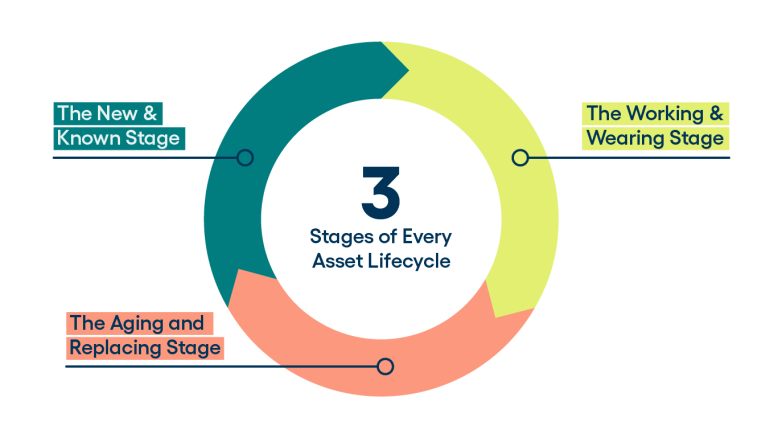
In the Aging & Replacing stage, consider:
- What are the biggest challenges at this stage? Knowing when repeated repairs have become ineffective and preparing leadership for budget needs.
- What are the biggest risks at this stage? Reactive repairs that require resource reallocation, hinder productivity, and disrupt operations.
- What does success look like at this stage? Replacements are covered in your capital budget, funds are allocated, and maintenance isn’t caught off guard.
- What does this stage set up for the future? Improved capital planning, resilience, and leadership confidence in your long-term strategy.
Proactively planning the future
With the help of modern investment planning tools, facilities leaders don’t have to go it alone. Asset Investment Planning (AIP) connects data from facilities and finance teams to forecast needs, evaluate risks, and prioritize funding.
According to the 2026 Asset Lifecycle Report, 97% of respondents (made up of facilities leaders across the U.S.) have a 3–5 year capital plan in place. And 81% reported using asset data to adjust capital plans to incorporate expected lifespans and eventual replacement costs.
Moving from a reactive to a purposeful process guided by real-time data not only ensures continuity but earns your team trust as a strategic partner – rather than a cost center.
Conclusion
Imagine a more predictable maintenance operation where teams stay ahead of breakdowns, justify replacements with certainty, and plan capital improvements instead of reacting to crisis.
It doesn’t begin when assets are showing signs of decline and resistance to continued repair. Asset maintenance that accounts for the entire lifecycle of equipment, as laid out in our new e-book, “What If… A Guide on How to Ensure Your Asset Maintenance Strategy is Effective at Every Lifecycle Stage,” prepares your organization for the moments when decisions matter most.
Learn more about how today’s asset tracking efforts directly shape tomorrow’s outcomes. Click here to read the full e-book.


