
What if… Assets Look Identical on Paper, But One Costs Far More to Maintain?
Part 3 of our “What If...” series on smarter asset maintenance. Read part 2 here.
Across sites or facilities, it is common for multiple assets to share the same age, model, and specifications, yet perform very differently in the real world. One may operate in harsher conditions, run continuously, or suffer from inconsistent maintenance. Another may not.
Without a complete asset record, those differences stay hidden. The result is unexpected failures, weak justification for past spend, and repair or replacement decisions driven by assumptions instead of evidence.
A CMMS should prevent this kind of “what if” scenario, but many systems fall short. The difference is not the tool itself. It is what data you chose to track and when you started tracking it.
Identifying the costlier twin
When assets look identical on paper, the true cost of ownership often goes unnoticed. A modern CMMS makes that cost visible by capturing real-time performance data and long-term maintenance history.
With the right data in place, teams can compare lifecycle cost trends across similar assets and identify which ones are quietly consuming a disproportionate share of time, budget, and resources.
Organizations with complete asset histories make decisions faster and with less friction. Leaders are no longer debating opinions. They are looking at evidence that shows what an asset has endured and what it will likely cost if action is delayed.
Optimizing assets at each lifecycle stage
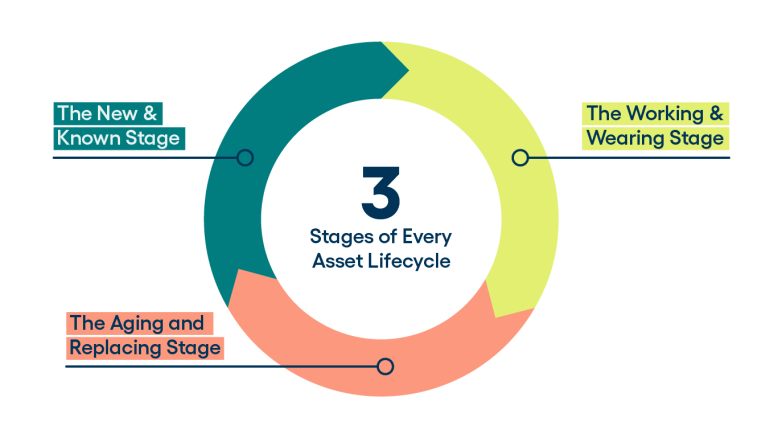
Understanding how assets behave at different points in their lifecycle increases the value of your CMMS data.
- New and known
Early documentation is critical. Establishing accurate asset records creates the foundation for future replacement planning and budget validation. - Working and wearing
As assets move into regular use, your CMMS should surface repair frequency, downtime, cost trends, and early warning signs of decline. - Aging and replacing
Replacement decisions carry real financial risk when early indicators are missed. Without historical context, capital plans are reactive instead of strategic.
Planning with confidence
Organizations cannot afford capital decisions based on incomplete or outdated data. The consequences are misallocated funds, missed opportunities, and growing maintenance backlogs.
That is why leaders are turning to data-driven capital planning to reduce risk, maximize available funding, and align facilities and finance around long-term priorities.
In fact, more than four out of five organizations, 81 percent, report using asset data to adjust capital plans based on expected lifespans and replacement costs. The City of Austin, TX used modern EAM capital planning tools to clearly communicate infrastructure needs to stakeholders, resulting in millions of dollars in additional funding to address aging assets and deferred maintenance.
For organizations just getting started, the Capital Planning Playbook outlines a practical four-stage framework for building smarter, more sustainable capital plans.
Conclusion
Building an effective PM strategy depends not on simply repeating what’s familiar because that’s the way things have always been done. Leaning on unproductive legacy practices puts your program at risk of unexpected breakdowns, misdirected resources, and poor long-range asset management and investment planning.
Intentional maintenance means proactively shaping the future of your asset management strategy with a dynamic CMMS or EAM, allowing leaders to pinpoint which assets drive the most downtime, which PM tasks actually reduce failures, and where resources can be adjusted to improve outcomes.
This is what our new e-book “What if… A Guide on How to Ensure Your Asset Maintenance Strategy is Effective at Every Lifecycle Stage” is designed to walk you through for every industry. It lets you ask the right questions to identify the biggest challenges, the biggest risks, what success looks like, and what each stage sets up for the future – helping to continuously strengthen your purposeful, data-driven PM strategy. Click here to read the full e-book.


