
What if… Your Preventive Maintenance Isn’t Actually Preventing Anything?
Part 2 of our “What If...” series on smarter asset maintenance. Read part 1 here.
Preventive maintenance (PM) is intended to maintain asset reliability through a continuous cycle of scheduled inspections and routine maintenance to help teams spot potential issues before they arise. But many organizations can find themselves repeating the same PM routines indefinitely without visibility into actual repair outcomes because they simply do things “the way we’ve always done it.”
Without data to evaluate its effectiveness, preventive maintenance can become an inefficient and costly exercise, failing to achieve its core purpose of avoiding equipment failures and extending asset life. And when relying on paper-based asset maintenance systems, organizations have even more difficultly moving beyond simply doing maintenance to truly improving maintenance strategy.
Modern CMMS or EAM solutions offer a wealth of data points, from tracking to KPIs to costs, to make it easier to compare your PM activity against real results, so you can make adjustments to maintenance frequency and prioritization when and where you need to. Evaluating the impact of your PM program regularly is an important step to help you prevent emergencies and deliver continuous asset productivity.
Agility at every asset stage
The most effective preventive maintenance programs aren’t static or reactive. They should be flexible and adapt as you gather more asset data. Organizations should focus on refining maintenance schedules and prioritization based on real performance rather than past examples or established protocols.
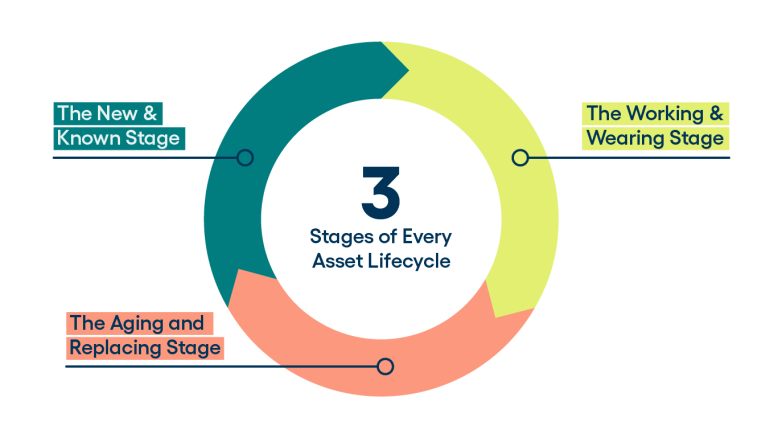
Addressing the challenges and opportunities in each of the three asset lifecycle stages can enrich your CMMS, adding value from day one and optimizing your PM program.
- In the earliest “New & Known” stage, capturing complete asset data and PM requirements builds a foundation for effective work orders and long-term tracking.
- As your assets move into the second “Working & Wearing” stage, clear visibility into asset performance and condition data allows for better PM adjustments.
- In the final “Aging & Replacing” stage, knowing when PM repairs have become inefficient allows you to prepare for replacements before urgent failures occur.
Findings from the 2026 Asset Lifecycle Report show that 87% of asset and facilities managers expressed confidence in their strategy to avoid unplanned downtime. However, only 32% had performed facilities condition assessments (FCAs), a vital process for maintaining reliable building data. This gap raises the question whether asset managers are relying on outdated or inaccurate information to make crucial capital planning decisions.
When accurate data is captured early and maintained consistently over time, your CMMS becomes invaluable for informing your maintenance and asset management strategy. Patterns can be detected quicker, failures become easier to forecast, and costs become more manageable.
Conclusion
Building an effective PM strategy depends not on simply repeating what’s familiar because that’s the way things have always been done. Leaning on unproductive legacy practices puts your program at risk of unexpected breakdowns, misdirected resources, and poor long-range asset management and investment planning.
Intentional maintenance means proactively shaping the future of your asset management strategy with a dynamic CMMS or EAM, allowing leaders to pinpoint which assets drive the most downtime, which PM tasks actually reduce failures, and where resources can be adjusted to improve outcomes.
This is what our new e-book “What if… A Guide on How to Ensure Your Asset Maintenance Strategy is Effective at Every Lifecycle Stage” is designed to walk you through for every industry. It lets you ask the right questions to identify the biggest challenges, the biggest risks, what success looks like, and what each stage sets up for the future – helping to continuously strengthen your purposeful, data-driven PM strategy. Click here to read the full e-book.


